

Concrete damage rarely starts as a major problem. In most buildings, it begins with small surface changes that are easy to overlook. Minor cracks, slight discoloration, or areas that don’t seem urgent at first. Over time, these early signs can develop into more serious structural concerns if they are not addressed.
For property owners and managers, understanding what to look for can make a significant difference. Recognizing early warning signs allows you to take action before repairs become more complex and costly.
This guide breaks down the most common indicators of deterioration, what causes them in Toronto buildings, and where issues tend to appear first. It also outlines when to involve a contractor and how timely concrete restoration in Toronto helps maintain the condition and performance of your property.
What Concrete Restoration Means for Existing Buildings
Concrete structures are built to last, but they are not immune to wear over time. In active environments like Toronto, buildings are exposed to moisture, temperature swings, and heavy use year-round. These conditions gradually affect structural surfaces, especially when early warning signs are ignored.
Concrete restoration in Toronto focuses on identifying and addressing damage before it spreads. This includes repairing compromised areas, restoring structural integrity, and preventing further deterioration. For property owners, this work is less about appearance and more about maintaining safety and long-term performance.
Most issues begin small. A minor crack or surface defect can develop into deeper structural concerns if left unaddressed. Regular inspections and timely concrete repair in Toronto help prevent localized damage from turning into larger, more expensive repairs.
Common Signs of Concrete Deterioration
Concrete damage rarely happens all at once. It develops in stages, and early signs are often visible if you know where to look. Common indicators include:
- Cracking: Surface cracks can form due to stress, movement, or temperature changes. While some cracks are minor, others can allow water to enter and accelerate damage.
- Spalling: This occurs when the surface begins to flake or break away, often exposing the inner layers. Spalling concrete repair in Toronto is commonly required when freeze-thaw cycles weaken the surface.
- Rust staining: Brown or reddish stains typically indicate corrosion of internal steel reinforcement. This is often a warning sign that moisture has reached deeper layers.
- Delamination: Layers of concrete begin to separate internally, which may not always be visible from the surface but can lead to sudden failure if ignored.
- Exposed rebar: When reinforcing steel becomes visible, the structure is already compromised. Exposed rebar repair in Toronto is required quickly to prevent further corrosion.
- Water damage: Persistent moisture can weaken concrete over time, especially in areas with poor drainage or sealing.
Recognizing these signs early allows for targeted building concrete repair in Toronto before the damage spreads across larger sections of the structure.
What Causes Concrete Damage in Toronto Buildings
Concrete deterioration is often the result of repeated exposure to environmental stress rather than a single event. In Toronto, several factors contribute to ongoing wear. Key causes include:
- Freeze-thaw cycles: Water enters small cracks, freezes, expands, and forces the concrete apart. This cycle repeats throughout the winter and accelerates surface breakdown.
- Salt exposure: De-icing salts used on roads, parking garages, and walkways can penetrate concrete and contribute to internal corrosion.
- Water penetration: Poor drainage or failed sealing allows water to move deeper into the structure, increasing the risk of internal damage.
- Aging materials: Over time, even well-built concrete begins to weaken, especially if it has been exposed to heavy use or environmental stress.
These conditions often overlap, increasing the need for structural concrete repair in Toronto as buildings age. Addressing the root cause, not just the visible damage, is key to long-term performance.
Areas Where Damage Often Appears First
Some parts of a building are more exposed than others and tend to show signs of deterioration earlier. Common high-risk areas include:
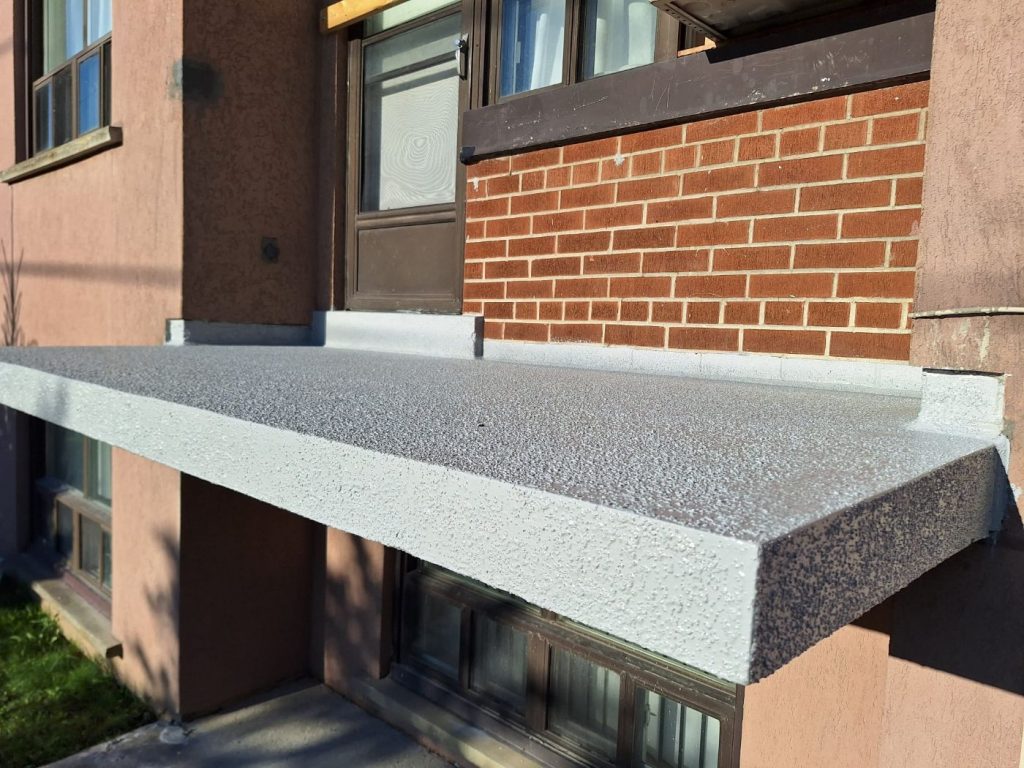
- Balconies: Constant exposure to moisture and temperature changes makes these surfaces prone to cracking and surface breakdown. Balcony concrete repair in Toronto is often required as buildings age.
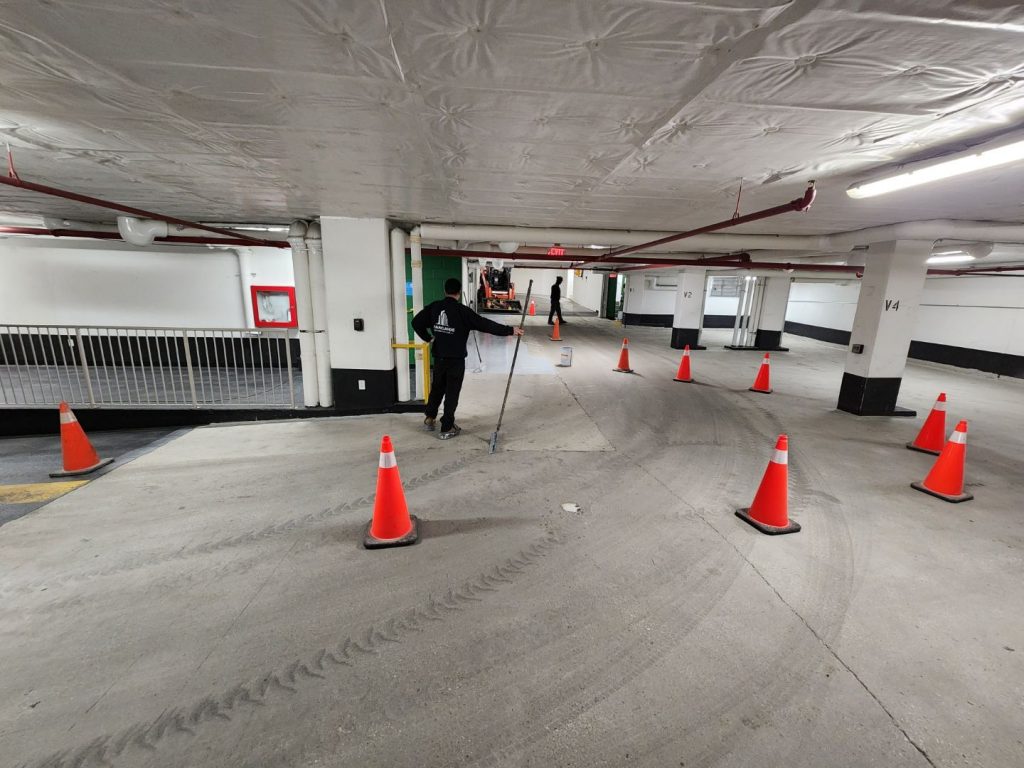
- Parking garages: Heavy vehicle traffic, combined with salt exposure, creates a harsh environment for concrete. Parking garage concrete repair in Toronto is one of the most frequent restoration needs in multi-level structures.
- Ramps: Repeated use and exposure to moisture increase wear and tear on sloped surfaces.
- Slab edges: These areas are more vulnerable to water penetration and often show early signs of spalling or cracking.
- Walls and soffits: Vertical and overhead surfaces can develop hidden damage, especially where water infiltration is present.
Focusing inspections on these areas helps identify where concrete restoration in Toronto is most urgently needed.
Why Early Repairs Save Money
Delaying repairs often leads to higher costs over time. What starts as a small issue can spread into surrounding areas, increasing the scope of work required. Early intervention allows for:
- Targeted repairs instead of full section replacements
- Reduced labour and material costs
- Less disruption to building occupants or operations
- Lower risk of structural complications
For example, addressing minor surface damage early can prevent the need for large-scale structural concrete repair in Toronto later on. Once internal reinforcement begins to corrode, repairs become more complex and costly.
Staying ahead of deterioration helps property owners maintain control over both timelines and budgets.
When to Call a Concrete Restoration Contractor
Knowing when to bring in a professional can prevent minor issues from escalating. In many cases, visible damage is only part of the problem.
It may be time to schedule an assessment if:
- Cracks are spreading or becoming more noticeable
- Surface damage is worsening over time
- Water intrusion is visible in multiple areas
- Rust stains or exposed rebar are present
- Sections of concrete sound hollow or loose underfoot
A qualified contractor can assess the extent of the damage and recommend appropriate building concrete repair in Toronto. This includes identifying underlying issues that may not be immediately visible. Acting at the right time allows for more efficient repairs and helps avoid emergency work.
How Avangarde Restoration Helps Toronto Properties
At Avangarde Restoration, we work with property managers, condo boards, and commercial building owners to address concrete deterioration at every stage. Our approach focuses on accurate assessment, clear scope definition, and controlled execution.
Each project begins with a detailed inspection to determine the extent of damage and identify contributing factors. From there, repairs are planned to address both visible issues and underlying causes.
Services include:
- Targeted concrete repair for localized damage
- Spalling concrete repair for surface breakdown
- Exposed rebar repair to address corrosion risks
- Parking garage concrete repair for high-traffic structures
By focusing on long-term performance, the Avangarde Restoration team helps extend the lifespan of concrete structures while reducing the likelihood of recurring issues.
Book a Concrete Assessment in Toronto
Concrete damage does not improve on its own. Early action helps limit repair scope and prevents issues from spreading across the structure. If you are noticing signs of wear or want a professional assessment, Avangarde Restoration can help evaluate the condition of your building and outline next steps.
Contact us today for a building concrete assessment in Toronto.